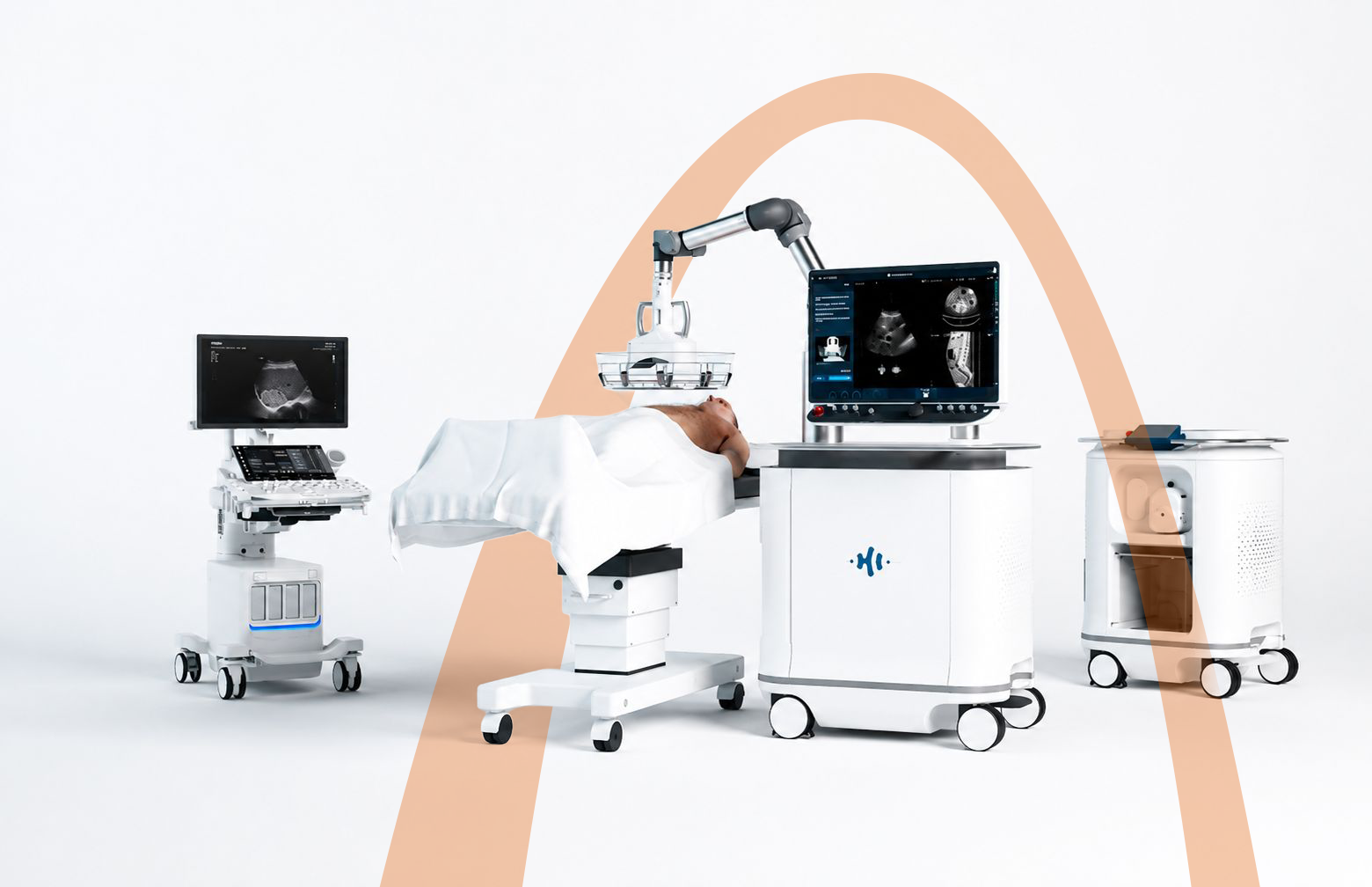
Liver tumors, including primary hepatocellular carcinoma, cholangiocarcinoma, and metastatic disease, remain a difficult referral decision. Many patients aren't resection candidates, and others have lesions poorly suited to thermal ablation due to size or location near major vessels. Histotripsy, a non-thermal, non-invasive focused ultrasound technology, has emerged as a new option, and referring physicians across the Greater St. Louis Area are increasingly asking where it fits.
This guide is written for primary care providers, gastroenterologists, hepatologists, oncologists, and surgeons who want a clear, evidence-based understanding of histotripsy for liver tumors and when a referral to an interventional radiology team, such as STL IOIR Clinics in St. Louis, Missouri, may be appropriate. As with any emerging technology, treatment suitability depends on individualized physician evaluation and multidisciplinary tumor board input.
Current Challenges in Managing Liver Tumors
Surgical resection remains a gold standard, but most patients present with unresectable disease. Thermal ablation (RFA, MWA) is effective for many small lesions, but the "heat-sink effect" reduces efficacy near large vessels, and caution is required near the diaphragm, bowel, or bile ducts. Central or perivascular tumors often fall into a treatment gap between "resectable" and "amenable to thermal ablation," the gap histotripsy was developed to address.
What Is Histotripsy?
Histotripsy is a non-invasive, non-thermal, non-ionizing focused ultrasound technology that mechanically destroys targeted tissue through acoustic cavitation. High-intensity ultrasound pulses generate rapidly oscillating microbubbles at a precise focal point; these bubbles expand and collapse within microseconds, mechanically liquefying tissue rather than heating it. Because the mechanism is mechanical, not thermal, histotripsy may avoid many heat-related risks near vasculature and bile ducts, with a treatment zone the physician can visualize and define with sharp margins.
Histotripsy for liver tumors received FDA marketing authorization via the De Novo pathway in 2023, based on prospective, multicenter trial data (commonly referenced as the #HOPE4LIVER studies). Physicians should verify current FDA labeling directly, as regulatory language evolves.
Procedure Overview
Treatment is delivered using a platform that integrates real-time ultrasound imaging with a robotically positioned transducer. The interventional radiologist defines a treatment volume with margin, then delivers ultrasound pulses under continuous imaging guidance, visualizing the cavitation "bubble cloud" as it forms. Procedures are typically performed under general anesthesia or deep sedation. Because no probe is placed into the liver, recovery may be shorter than with percutaneous ablation, though this varies by patient. Follow-up contrast-enhanced MRI or CT assesses the ablation zone and rules out residual viable tumor.
Benefits and Limitations
Advantages: non-invasive delivery, a non-thermal mechanism that may reduce risk near critical structures, and real-time visualization during treatment, potentially expanding options for tumors previously considered difficult to ablate.
Limitations: appropriate size/number parameters should be confirmed at referral, as they may be refined as evidence matures; long-term oncologic outcome data is still developing relative to decades of resection experience; and not every tumor location is anatomically accessible with acceptable safety margins. Histotripsy is a local therapy, not a systemic one, and its role should be defined through multidisciplinary review, not anticipated future indications.
Patient Selection: Who Should Be Referred?
Candidates are generally patients whose liver tumors are difficult to treat with resection or thermal ablation due to location, with adequate liver function and performance status. Both hepatocellular carcinoma and metastatic lesions (e.g., colorectal liver metastases) have been studied. Contraindications mirror other liver-directed procedures: significant coagulopathy, poor hepatic reserve, or inability to tolerate anesthesia. Consider referral as soon as a tumor is deemed unresectable or a poor thermal-ablation candidate; early referral allows time for imaging review and tumor board discussion.
Histotripsy Compared with Existing Treatments
| Treatment | Invasiveness | Mechanism | Key Limitation |
|---|---|---|---|
| Surgical resection | Invasive | Removal | Requires adequate remnant liver |
| RFA / MWA | Percutaneous | Thermal | Heat-sink effect near vessels |
| SBRT | Non-invasive | Radiation | Cumulative dose limits |
| TACE | Minimally invasive | Chemoembolization | Not curative alone |
| Y-90 Radioembolization | Minimally invasive | Radiation microspheres | Requires mapping procedure |
| Histotripsy | Non-invasive | Mechanical cavitation | Evolving indication parameters |
Histotripsy vs. ablation, in short: both destroy tumor tissue locally, but RFA/MWA rely on heat while histotripsy relies on mechanical cavitation, the reason it's being explored for tumors near vasculature where thermal margins are a concern.
Fitting Into the Multidisciplinary Pathway
Medical oncologists may consider histotripsy as local control alongside systemic therapy, particularly for oligometastatic disease. Hepatologists remain central to assessing hepatic reserve and transplant/resection candidacy. In some cases, histotripsy may serve as a bridge strategy pending multidisciplinary consensus. Combination approaches with systemic therapy or other liver-directed treatments are an active area of research and should be considered investigational absent supporting evidence.
Referral Considerations
Refer early, ideally once a tumor is identified as unresectable or a poor ablation candidate. Recent contrast-enhanced CT or MRI, a summary of tumor history and prior treatment, and relevant labs (liver function, coagulation) help streamline consultation.
Why Refer to STL IOIR Clinics
STL IOIR Clinics provides dedicated interventional radiology evaluation for liver-directed therapies, including histotripsy, for patients throughout St. Louis, Missouri, and the Greater St. Louis Area. The team collaborates closely with referring oncologists, hepatologists, and surgeons so treatment decisions are made in a coordinated, tumor-board-informed context. A structured intake process minimizes delay between referral and consultation, and referring physicians receive direct communication regarding candidacy, treatment planning, and follow-up imaging.
Conclusion
Histotripsy is a meaningful addition to the liver tumor treatment landscape: a non-invasive, non-thermal, FDA-authorized option that may extend treatment access to patients whose tumors are poorly suited to resection or thermal ablation. Appropriate patient selection through multidisciplinary evaluation remains essential, and not every patient will be a candidate.
If you have a patient with a liver tumor who may benefit from evaluation, contact STL IOIR Clinics to schedule a physician consultation or discuss a referral. Our interventional radiology team is available to review imaging and discuss candidacy for histotripsy and other liver-directed therapies.